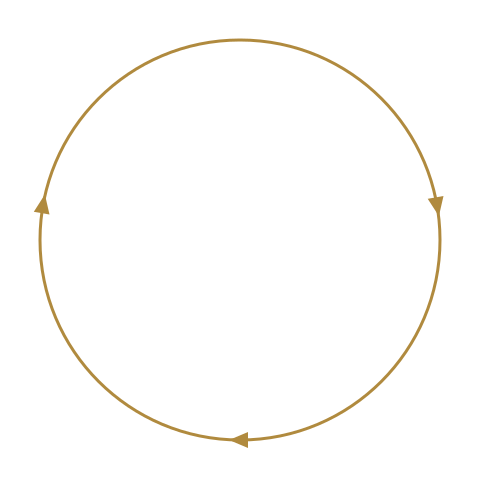

You price a job and do the work. Someone enters the bills and runs payroll. Months later an accountant files the return. Each step belongs to a different person, and nothing learned at the end makes it back to the start. The next job gets priced the same way as the last one.
Every job starts with a price built on what the work costs your firm to deliver: your burdened crew rates, your overhead, and your own history on that service line.
While the job runs, hours, costs and billing are recorded against it as they happen. When the job closes, the record is already complete.
I compare what you bid to what the job cost. You see which jobs and service lines made money, which didn’t, and why.
Then it goes back to step one. What the last job showed you sets the price of the next one.
Your accounting decisions rest on evidence: what to bill, when to bill it, and how much cash is tied up in unbilled work and receivables.
Tax is planned all year from the same numbers, so the return confirms a plan you already knew.
The monthly close and the returns still get done, and I do them. They are what the loop runs on.
An intro call is a direct conversation about your firm and where the numbers stand. No commitment.
Book an Intro Call →